非言語臨床ワーク✖️AI ワークショップ @オウル大学
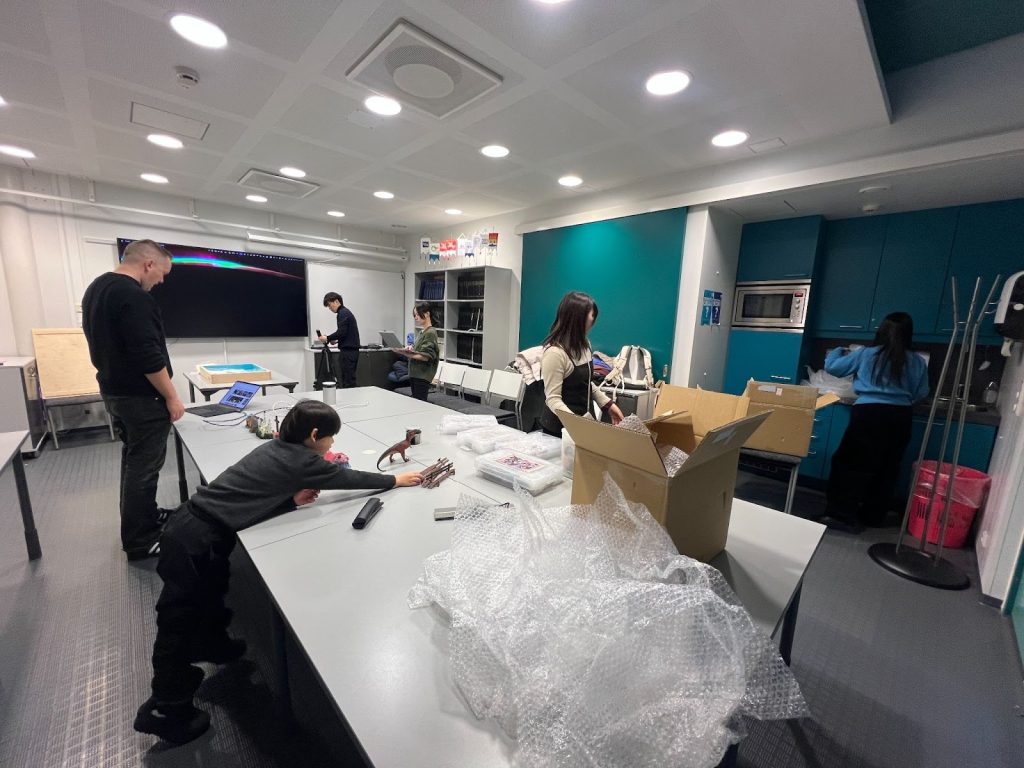
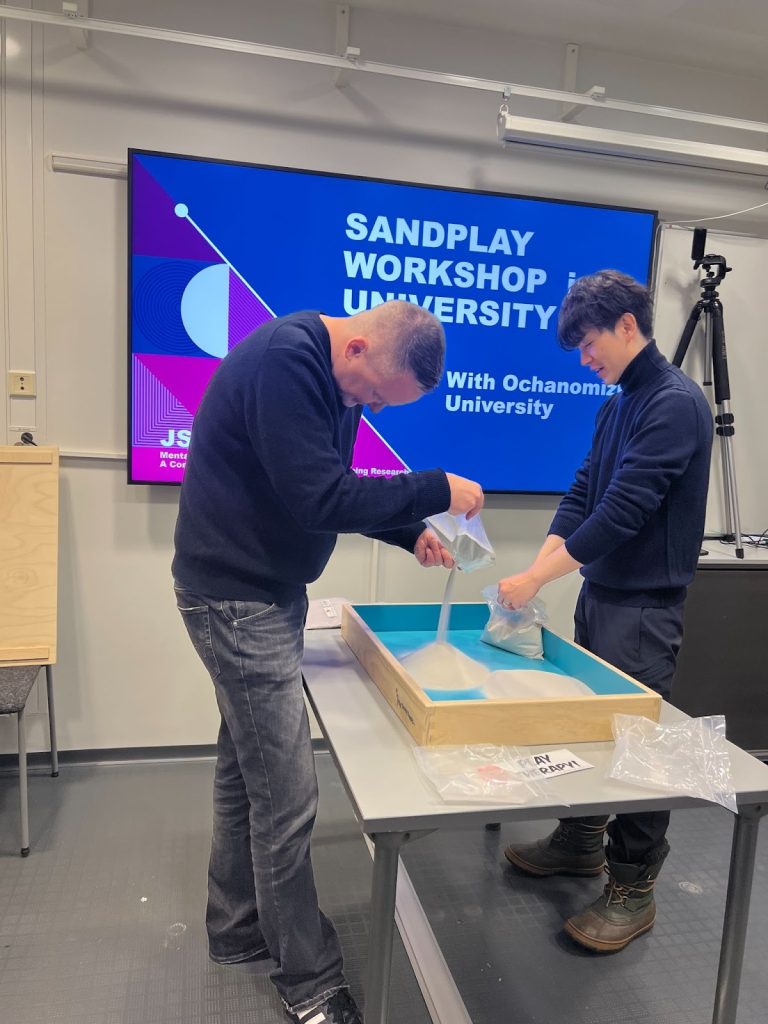
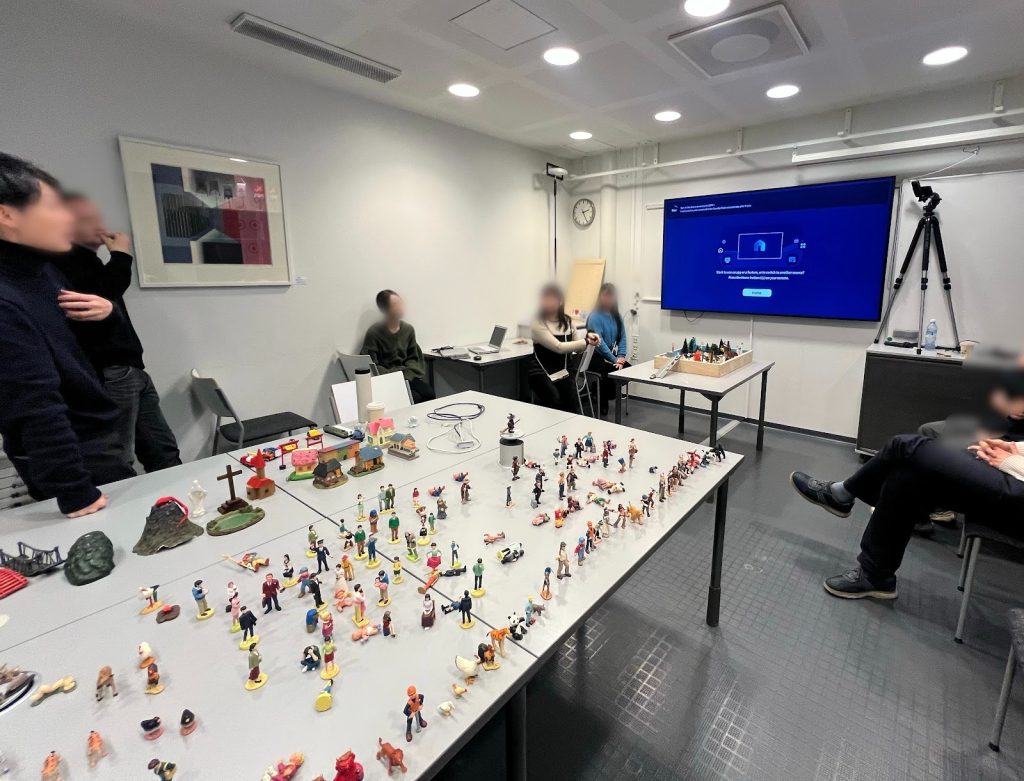
In November 2025, a workshop exploring the potential use of AI in mental health support was held at the University of Oulu in Finland.
Members from Ochanomizu University specializing in clinical psychology, members from the University of Oulu specializing in information engineering, as well as locally participating researchers from other disciplines, engaged in interdisciplinary discussions through experiential, hands-on practice.
2025年11月、フィンランドのオウル大学にて、メンタルヘルス支援におけるAIの活用可能性を探るワークショップを実施しました。臨床心理学を専門とするお茶の水女子大学のメンバーと、情報工学を専門とするオウル大学のメンバー、さらに現地で参加いただいた他分野のメンバーが、体験的な実践を通して領域横断的にディスカッションを行いました。
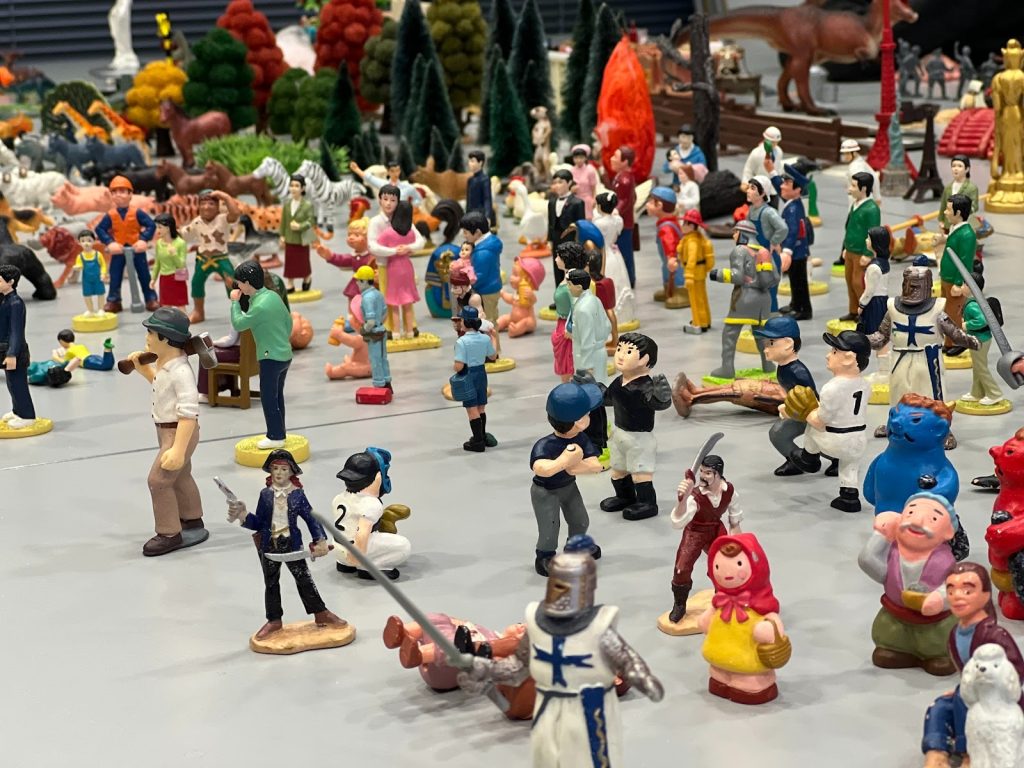
The workshop employed sandplay, a method widely used in the field of clinical psychology.
In sandplay therapy, the creator freely expresses internal images by placing miniature objects in a sandbox, while a therapist observes the process. This method has been shown to have positive effects on mental health.
今回用いたのは「箱庭」という臨床心理学の世界で広く使われる手法です。箱庭の作り手はセラピストが見守る中で、砂箱の中にミニチュアを置くことを通じ、自身の中に浮かぶイメージを自由に表現します。メンタルヘルスを改善する効果が示されています。
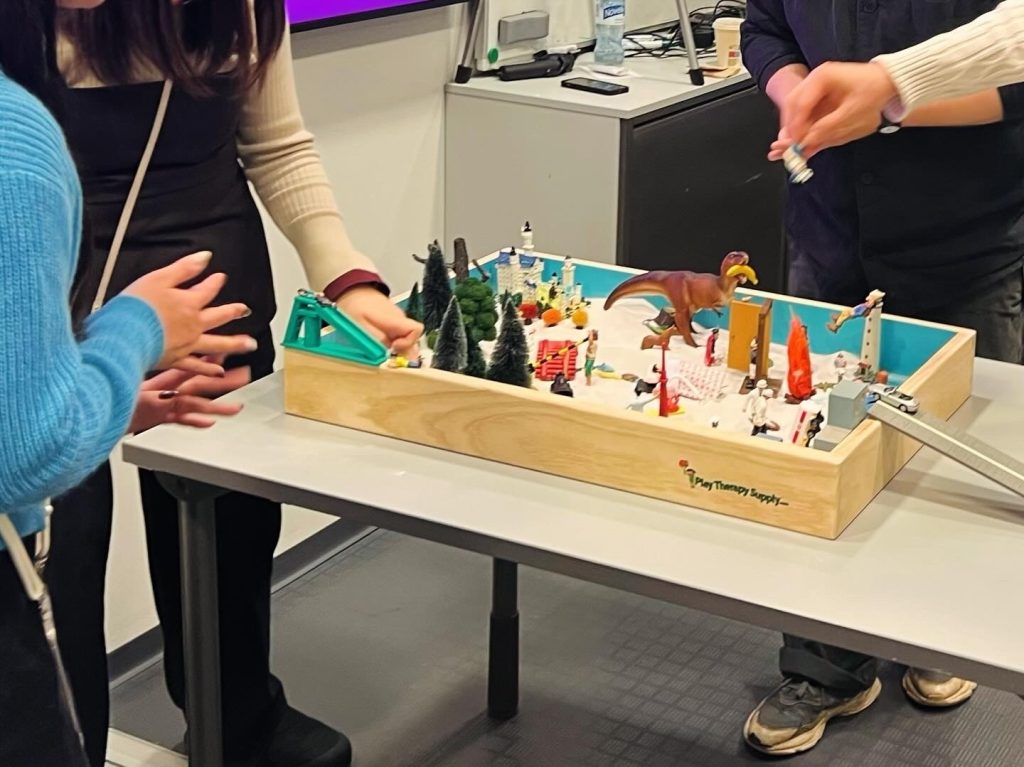
Because sandplay enables nonverbal expression by its creator, there is potential for enhanced mutual understanding when multiple participants collaboratively create a single sand tray. In this workshop, we hypothesized that such effects could also be expected among individuals with different linguistic and cultural backgrounds. Furthermore, we anticipated that AI could provide support in addressing conflicts between creators and difficulties in communication that arise during the collaborative process.
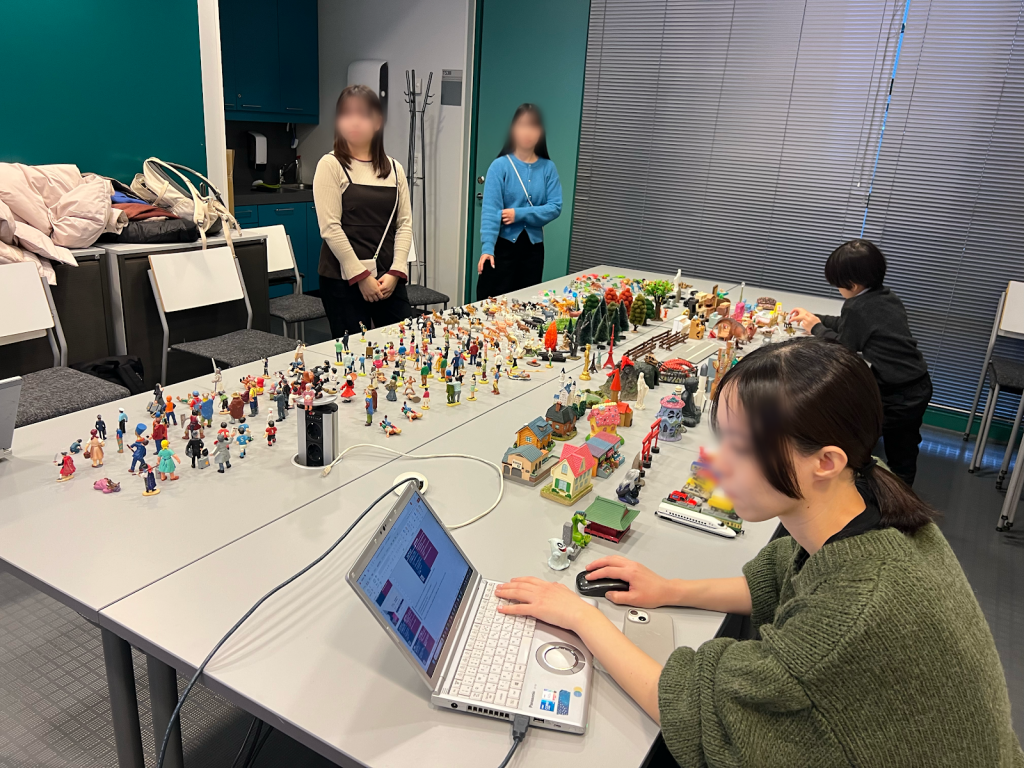
In the workshop, two participants from Japan and two from Finland jointly created a single sand tray simultaneously. An AI system mediated their interactions throughout the process.
箱庭は作り手の非言語的な表現を可能にするツールのため、複数人が同時に一つの箱庭を制作することで、相互理解が促進される可能性があります。今回は異なる言語・文化的背景を持つ人々の間でもその効果が期待されるのではないかと考えました。さらにその際に生じる作り手同士の葛藤、意思疎通の困難に対し、AIがサポートできるのではないかと予想しました。
ワークショップ当日は、日本からの参加者2名、フィンランドからの参加者2名が、言葉を使わずに、同時に一つの箱庭を制作しました。さらに、AIがその際のやり取りを仲介しました。
(ファシリテーター 笠原千秋 Facilitator: Chiaki Kasahara)
Participant Experience 参加者の体験
Japanese Participants’ Experience 日本側参加者の体験
廣田愛海 (Ami Hirota)
In the workshop, we had the experience of collaboratively creating a single sand tray together with participants whose native languages were different from our own. Creating one sand tray with multiple people while exchanging almost no words was a completely new experience for me, and at first I remember feeling slightly unsure about how to proceed.
However, as the process unfolded, I naturally began to notice the movements of the other participants—such as which miniatures they reached for and where and how they placed them in the sand. In response, my own choices of items and their placement gradually took shape. Even without conversation, there was a sense of gentle warmth flowing among the participants, as if we were jointly experiencing one another’s ways of thinking and seeing the world.
Reflecting on the creation process, I realized that I was moving my hands while thinking less about the world I personally wanted to create, and more about the world the other participants might be envisioning—what kind of items would make the shared world comfortable for all of us. I sensed a similar attitude from the others as well, and felt that the miniatures I placed were respected and, at the same time, served as triggers for someone else’s imagination. The wordless interaction was deeply comfortable, and it reminded me of the powerful capacity of sandplay as a tool for nonverbal expression.
The mediation provided by AI was also helpful. When participants wrote down their thoughts and intentions in their respective native languages, the AI translated them, making the other participants’ expressions—previously perceived only in abstract terms—more concrete and easier to grasp. In this sense, the AI served as a bridge for communication. I also found value in the fact that the AI’s comments did not favor any particular participant, but instead viewed the sand tray as a whole from a neutral perspective, ensuring that everyone’s expressions were treated fairly.
Even so, the greatest power lay in the sand tray itself. It was striking to realize that, even without relying on words, participants were able to imagine what others wished to express and to acknowledge and accept what was expressed.
Through this workshop, I found particular value in two aspects: the ability to listen to another person’s world through sandplay without depending on language, and the way AI mediation helped ensure that each individual’s expression was treated equitably. By combining nonverbal expression through sandplay with AI-based translation and a flat, unbiased perspective, I feel that new possibilities may open up—for example, in supporting families or groups experiencing conflict, or in working with pairs of individuals with unequal power relationships—offering an alternative to conventional, language-centered approaches.
ワークショップでは、母語が異なる参加者と一緒に一つの箱庭を作る体験をしました。言葉をほとんど交わさないまま同じ箱庭を複数人で作っていくという体験は初めてで、最初はどのように作ればよいのか少し迷った記憶があります。ですが作成が進むと、他の参加者がどのミニチュアに手を伸ばすのか、どこにどう配置しているのかといった動きが自然と目に入り、それに応じるように自分の次のアイテムの選択や配置が決まっていきました。会話はなくても、相手の考え方や世界の見え方を一緒に体験するような、不思議なあたたかさが参加者の間に流れていたと思います。
作成過程を振り返ると、相手がどのような世界をつくろうとしているのか,どのアイテムを置けばお互いに心地よい世界になるのかなど、自分が作りたい世界より他の参加者が思い浮かべている世界のことを考えながら手を動かしていました。また、他の参加者からも同様の雰囲気を感じ、自分が置いたミニチュアが尊重されながら、誰かのイメージのきっかけになっていたようにも感じました。言葉を使わない相互のやりとりが心地よく、箱庭という道具が持つ非言語表現の力の大きさを改めて感じました。
AIの仲介も助けになりました。母語の異なる参加者同士が書いた自分の思いや制作の意図をAIが翻訳してくれたことで、抽象的にしか感じ取れていなかった相手の表現が具体化されて、よりはっきりと捉えられるようになりました。コミュニケーションの橋渡しをしてくれたと思います。またAIからのコメントは、参加者の誰かの立場に偏ることなく、表現された箱庭全体をフラットに見てくれたため、参加者全員の表現が公平に扱われた点にも価値を感じました。それでも、大きな力を発揮していたのは箱庭そのもので、言葉に頼らなくても、お互いが表現したいことを想像し合い、表現されたものを認め合うことができることに驚きが残りました。
このワークショップを通して、箱庭を通して言葉に頼らなくても相手の世界に耳を傾けられること、AIの仲介によって一人ひとりの表現が公平に扱われることの二つに価値を感じました。今回のように、箱庭という非言語ツールによる表現と、AIの翻訳・フラットな視点が組み合わされることで、たとえば葛藤を抱える家族・集団や、パワーバランスの異なる二者への支援など、従来の言語的な方法ではないアプローチとして、新しい可能性が広がっていくのではないかと感じています。
岩根由佳 (Yuka Iwane)
Although I was already familiar with sandplay work through similar activities conducted in Japan, collaboratively creating a sand tray with people from different backgrounds in Finland—a place geographically and culturally distant from Japan—was a fresh and highly valuable experience.
Before the workshop began, I felt not only nervous about creating a sand tray together with people I was meeting for the first time, but also anxious about whether I would be able to communicate with the Finnish participants due to my lack of confidence in English. Once the workshop started, however, these concerns largely faded, and I found myself fully focused on the shared process of constructing the world of the sand tray.
I believe several factors contributed to this sense of immersion. First, miniatures such as trees, animals, and human figures, as well as elements like rivers and seas, allowed us to share images even without words. Although the languages used to name these objects differ, the meanings and images they evoke are commonly understood. Observing how participants selected and placed miniatures became, for me, a way of sensing their thoughts and emotions.
In addition, each participant wrote reflections in their own native language—Japanese or Finnish—and read the AI-translated reflections of everyone else in their own language. This process gave form to the thoughts I had previously inferred, allowing me to grasp more concretely what kind of world each participant was trying to create and how they individually perceived it. This deepened and expanded the shared sense of co-creation and the sand tray world itself. Gaining insight into one another’s perspectives also made it possible to enjoy the unexpected combinations of miniatures, increased moments of eye contact, and the exchange of smiles during the process, all of which contributed to a growing sense of safety.
I found it particularly fascinating that multiple small worlds existed within a single sand tray, and that each of them emerged not from individual intentions alone, but through interactions among the participants. Even without direct verbal communication, a shared space was created around the sand tray where we could engage together. Within that space, I felt that my own thoughts and world were protected, while mutual respect among participants was maintained.
The fact that AI mediated the process, allowing participants to engage primarily through nonverbal interaction, felt highly significant. Beyond supporting multinational communication as in this workshop, I strongly feel that this approach holds potential for collaborative work across generations and age groups, for promoting mutual understanding, and for expanding interpersonal relationships.
箱庭を用いたワークそのものは国内でも実施していて馴染みのあるものでしたが、フィンランドという日本から遠く離れた土地で、出自の異なる相手と共同で箱庭を作ることは非常に新鮮で貴重な体験でした。
ワークショップにおいて、初対面の相手と一緒に箱庭を作ることへの緊張だけでなく、英語への苦手意識からフィンランドの参加者とやり取りできるかに不安がありましたが、いざ始まってからはそうした考えはあまり浮かばず、箱庭の世界を共同構築することに集中していたように感じます。
その感覚に色々なことが影響していたと感じますが、まず、木や動物、人といったミニチュア、川や海などは言葉がなくてもイメージを共有できることが基盤にあったように思います。そのものを表現する言葉は異なるけれど、どんな意味を持つかというイメージは共通認識としてあり、参加者がミニチュアを選んで置く様子そのものが、私にとってその人の考えや感情を推し量る手段になっていました。
また、日本語とフィンランド語というそれぞれの母語で感想を書き、AIに翻訳された全員の感想を母語で読んだことで、推し量っていた参加者の考えが形になり、具体的にどのような世界を作ろうとしていたのか、個人の捉え方を感覚として掴めたことも、共同構築の感覚や箱庭の世界を深め、拡げることを助けたように感じます。お互いの捉え方が分かったことで、ミニチュア同士の相性の奇妙さを面白がったり、アイコンタクトが増えて笑顔のやり取りをしながら作っていけたことも安心に繋がりました。
一台の箱庭の中に小さな世界が複数存在していたこと、その一つ一つが個人ではなく参加者同士の相互作用を通して作られていったことがとても興味深かったです。言葉で直接のやり取りがなくとも、箱庭を中心に一緒に関わり合う空間が作られ、お互いを尊重し合う形で自分自身の考えや世界も守られている感覚が得られたようにも感じます。
AIが仲介し、参加者同士は非言語のやり取りを中心に関わっていけることは、今回のような多国籍間のコミュニケーションのサポートだけでなく、異なる世代や年齢の相手との共同作業や、相互理解の促進、関係性を拡げていく可能性があると強く感じました。
Use of AI from a Psychologist’s Viewpoint 心理士から見たAI活用の展望
綾城初穂 (Hatsuho Ayashiro)
In this workshop, a situation was deliberately created in which both “expressing one’s own intentions” and “understanding the intentions of others” had to rely solely on the placement of figures. As a result, it felt as though the intrinsic potential of sandplay was being fully realized.
While participants disclosed themselves, they also paid close attention to the intentions of others. Through this process, they not only co-created a space that was mutually satisfying, but also moved on to considering whether to further develop the relationship expressed there or to preserve it as it was. This interaction was truly democratic, unfolding in a playful yet deeply respectful manner, and it strongly suggested that sandplay holds significant potential for intercultural communication.
Regarding the use of AI, there remain many issues to be addressed in future work. However, it should not be underestimated that AI support was indispensable in enabling users of Japanese and Finnish—rather than a shared language such as English—to interact in their respective native languages.
Furthermore, for facilitators and therapists who are responsible for mediating extremely delicate interactions, the presence of AI as a supporter—free from linguistic and theoretical constraints—seems to provide a strong sense of reassurance and undoubtedly contributes to improving the quality of practice. I would also like to further explore how these advantages of AI can be meaningfully returned to the participants themselves.
このワークショップでは、「自分の意図を示すこと」も「相手の意図を理解すること」も、置かれるフィギュアだけに頼らなければならない状況が作り出されたことで、箱庭がもつ本来の力が最大限に発揮されていたようにように感じました。
自分を開示しつつも、相手の意図にも多大な関心を払いながら、互いに満足できる空間を作り上げただけではなく、さらにその関係を発展させるのかあるいは守るのかの検討へと移るという、まさに民主的なやりとりがプレイフルかつ敬意に満ちて進んでおり、箱庭が多文化間のコミュニケーションに大きな可能性を持っていることがうかがえました。
AIの活用については今後の課題とすべきところも多いですが、英語ならともかく、日本語とフィンランド語の使用者が母語でやりとりをするということを達成するうえでAIのサポートが必要不可欠であったことは過小評価すべきではないと思います。
また、きわめて繊細なやりとりの仲介を担うファシリテーターやセラピストにとっては、言語的・理論的制約にとらわれないAIというサポーターがいることは、大きな安心感をもたらし、その実践の質を高めるのは間違いないように思いました。AIのもつこうした利点を参加者にどう還元していけるかについてもより深く検討していきたいと思います。
平野真理 (Mari Hirano)
Before conducting the workshop, I anticipated that each participant would focus primarily on self-expression and experience a sense of conflict in negotiating that expression in relation to others. However, once the workshop was carried out, I was surprised to observe that participants devoted far more attention to understanding the intentions of others and attempting to respond to others’ expressions than to expressing themselves, and that they genuinely enjoyed this process.
In this workshop, AI was introduced as a mediator adopting a neutral stance. However, because the creative process unfolded more smoothly than expected, this role did not appear to be particularly active. That said, in situations where some form of imbalance in experience were to arise among participants, a role responsible for adjusting or mediating such disparities would likely be essential. Alternatively, a format in which AI participates as one of the participants may also prove to be useful.
Moreover, in the process through which the shared world was created in this workshop, “humor” and “adventure” seemed to function as particularly important elements. These elements can be understood as productive deviations that make it possible to expand what has been constructed without destroying it. Such qualities also served to strengthen communication by fostering a sense of complicity among participants. While the participants in this case generated these elements naturally, it is unlikely that all cases would proceed in the same way. In situations where the shared world becomes stagnant, it may be possible for AI to provide these much-needed elements and help move the process forward.
ワークショップを実施する前は、参加者それぞれが自分を表現することに集中し、他者との間でそれを実現することの葛藤を体験するだろうと予想していました。ところが実施してみると、参加者は自己表現よりもはるかに多く、他者の意図を汲むことや、他者の表現に応答しようとすることを試み、そのプロセスを楽しんでいたことに驚きました。
今回、AIを中立的立場をとる仲介者として投入しましたが、制作プロセスが予想以上にスムーズに進行したため、その役割はあまり機能していなかったように思われました。しかし参加者間に何らかの体験の不均衡が生じるような場合には、その調整を担える役割が不可欠であると考えられます。もしくは、AIもひとりの参加者として参加する形式も有用かもしれません。
また今回の世界が創られたプロセスにおいては、「ユーモア」と「冒険」が重要なエッセンスであったように見えました。それは、構築したものを破壊することなく拡張するために必要な逸脱です。こうしたエッセンスは、参加者同士が共犯感覚をもつことでコミュニケーションを強くする役割も担っていました。今回の参加者はこれらを自然に生み出しましたが、必ずしもそのように進むケースばかりではないでしょう。もし世界が膠着した際に必要なこうしたエッセンスを、AIが提供できる可能性があるかもしれません。
Finnish Participants’ Experience フィンランド側参加者の体験
Locally in Oulu, we recruited two participants. Both were male, with doctoral degrees in math and computer science. One of the participants also holds a Master’s degree in Architecture. Both participants were eager to participate in the experience, and had never heard about sandplay earlier. This way, the workshop meant positive uncertainty and discovery.
オウルでは2名の参加者を募集しました。いずれも男性で、数学およびコンピュータサイエンスの博士号を有していました。そのうち1名は建築学の修士号も取得していました。両名ともこの体験への参加に意欲的であり、箱庭療法についてはこれまで一度も聞いたことがありませんでした。そのため、このワークショップは、前向きな不確実性と発見を伴うものとなりました。
We asked for their reflections after the workshop. It was clear that, initially, there was a clear sense of hesitation. One participant noted that he did not know how to begin, finding himself reacting to the placements of others rather than initiating creation himself. Yet, the shared space, without verbal cues, made such reactive creation possible. In the same vein, both participants noted how “calibrating” one’s own contribution relative to the group played a big role. For one participant, there was a clear anxiety about potentially disrupting the flow or dominating the narrative, with an especially dominant figure (dinosaur). Yet, nobody was alarmed by the object, which was a nice aha-moment of silent permission from others. This allowed the session to evolve from a chaotic beginning into a process that felt surprisingly smooth, with some turns but overall still moving toward a nice collectively created whole.
ワークショップ後には、参加者に振り返りを求めました。初めの段階では、明確なためらいの感覚があったことがはっきりしていました。ある参加者は、どのように始めればよいのかわからず、自ら創作を始めるというよりも、他者の配置に反応する形になっていたと述べていました。しかし、言葉による合図のない共有空間であったからこそ、そのような反応的な創作が可能になっていたとも言えます。同様に、両参加者とも、グループ全体との関係の中で自分の貢献をどのように「調整」するかが大きな役割を果たしていたと指摘していました。ある参加者にとっては、特に支配的な存在感を持つフィギュア(恐竜)を置いたことで、流れを乱したり、物語を支配してしまったりするのではないかという不安が強くありました。しかし、そのフィギュアに対して誰も警戒を示さなかったことが、他者からの静かな許可として感じられる印象的な「気づき」の瞬間となりました。これにより、セッションは混沌とした始まりから、意外なほどスムーズに感じられるプロセスへと発展し、いくつかの転機はありつつも、全体としては共同で創り上げられた調和の取れた一つのまとまりへと向かっていきました。
Both mentioned how the result contained a multitude of events and emotions. There was also a nice contrast in how participants perceived and wanted to use the water element: while some sought to use water (river, in particular) as a divider, another participant focused on expanding the blue area (resembling sea), seeking an exit from the chaos toward the open sea. So, a shore in the corner of the sandbox represented an escape from “everything” going on in the busier areas of the environment.
For both Finnish participants, the process itself drew them in as a function of time. The initial hesitation waned away fast this way. Furthermore, neither saw a clear need for using AI in the way we did in this workshop. Formative studies and focusing on the obstacles noticed during the play offer thus an excellent starting point for further studies in this context. In post-workshop discussions, we all identified several other ways in which AI could be useful in sandplay therapy, especially when doing it alone, and through prompting informal questions that could be used for reflection in the form of creation. We believe that while AI is not strictly necessary in this context, the setup (sandplay and the creative act itself) presents an excellent opportunity to study fundamental aspects of the interaction between humans and AI in a therapeutic setting.
両者とも、結果には多くの出来事や感情が含まれていると述べていました。また、水の要素をどのように捉え、どのように使いたいかについて、参加者間に興味深い対照が見られました。ある参加者は水(特に川)を境界として用いようとしていた一方で、別の参加者は青い領域(海を想起させるもの)を拡張することに注目し、混沌とした状況から開かれた海へと向かう出口を求めていました。そのため、サンドボックスの隅に配置された岸辺は、環境の中でも特に忙しい領域で起こっている「すべて」からの逃避を象徴するものとなっていました。
フィンランド人の2名の参加者にとっては、プロセスそのものが時間の経過とともに彼らを引き込んでいきました。その結果、当初のためらいはこの過程の中で速やかに薄れていきました。さらに、両者とも、本ワークショップで行った方法のようにAIを用いる明確な必要性は感じていませんでした。そのため、形成的研究や、制作中に気づかれた障害に焦点を当てることは、この文脈における今後の研究に向けた非常に有効な出発点を提供すると言えます。ワークショップ後の議論では、特に一人で箱庭を行う場合や、創作という形で内省を促すための非公式な問いかけを行う際など、AIが有用となり得る他の方法をいくつも見出しました。私たちは、この文脈においてAIが厳密に必要不可欠というわけではないものの、箱庭と創造的行為そのものという設定は、治療的な環境における人間とAIの相互作用の根本的な側面を研究する上で、極めて有望な機会を提供するものであると考えています。
Human-AI Interaction in Sandplay 箱庭におけるHuman-AI Interactionの展望
シモ ホシオ(Simo Hosio)
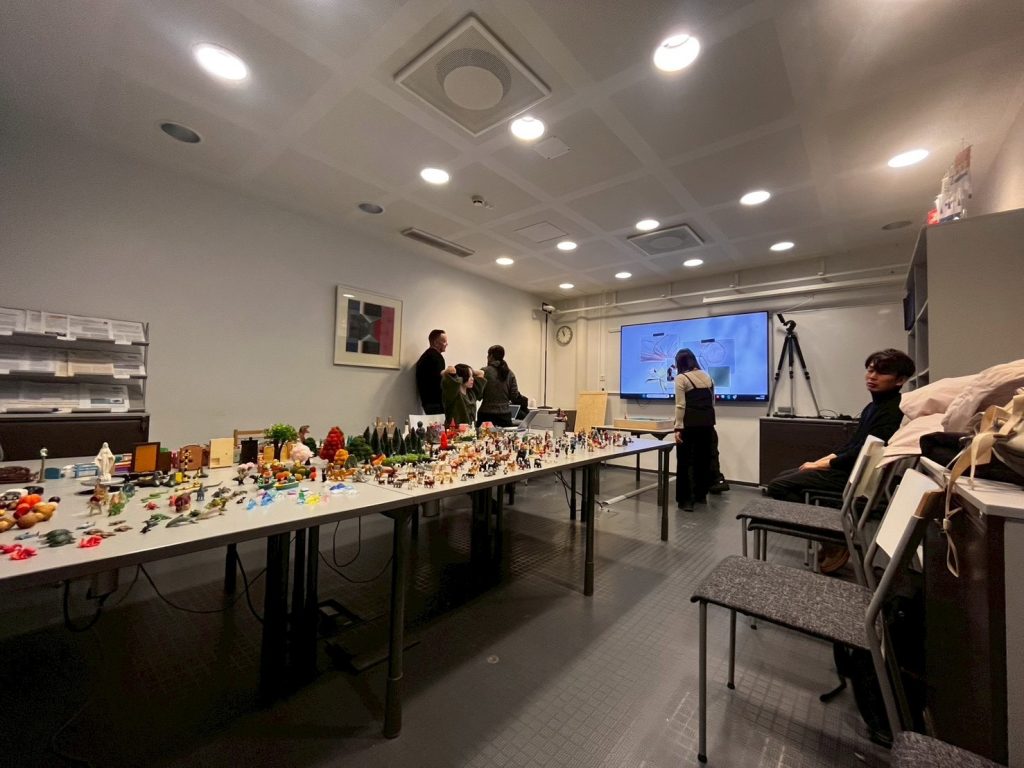
As a result of this workshop, Crowd Computing Research Group has now its own modest version of a sandplay environment. Through the discussions, both formal and informal, during and after the workshop, we have several potential ideas in mind that could be explored in the context of human-AI interaction. Sandplay, in itself, offers an engaging, fun, and novel experience that many people in Finland have not tried. Therefore, building an AI-assisted sandplay therapy experience could start a wonderful line of research, and we can think of multiple exciting research questions to explore. Some preliminary ideas include:
- Studying how AI can, in realtime, help people get unstuck in their creative process. For instance, the issue of “cold start” where people hesitate initially could be overcome by giving some suggestions.
- Investigating how to use multimodal AI to improve the actual therapeutic effect of sandplay dialogue
- Assist in negotiating cultural differences in sandplay, in teams with no shared language or cultural background
- Studying fundamental scientific questions, such as how much does participants’ beliefs and trust in AI technologies in general affect the calming or therapeutic effect of sandplay
本ワークショップにより、 Crowd Computing Research Group に小さな箱庭実施環境が整いました。ワークショップ中・終了後に行われた公式・非公式のディスカッションを通して、人間とAIの相互作用という観点から探究していくことができそうなアイデアが浮かび上がってきています。
箱庭制作そのものは、魅力的で楽しく、新規性のある体験であり、フィンランドではまだ多くの人が経験したことのない手法です。そのため、AIを支援的に取り入れた箱庭体験を構築することは、非常に意義深い研究の流れを生み出す可能性があります。
具体的には、以下のような研究テーマが考えられます。
・創作プロセスの中で行き詰まった際に、AIがリアルタイムでどのように支援できるかを検討する
・マルチモーダルAIを活用し、箱庭における対話の治療的効果をどのように高められるかを探る
・共通の言語や文化的背景を持たないチームにおいて、箱庭療法を通じた文化的差異の調整や橋渡しをAIがどのように支援できるかを検討する